
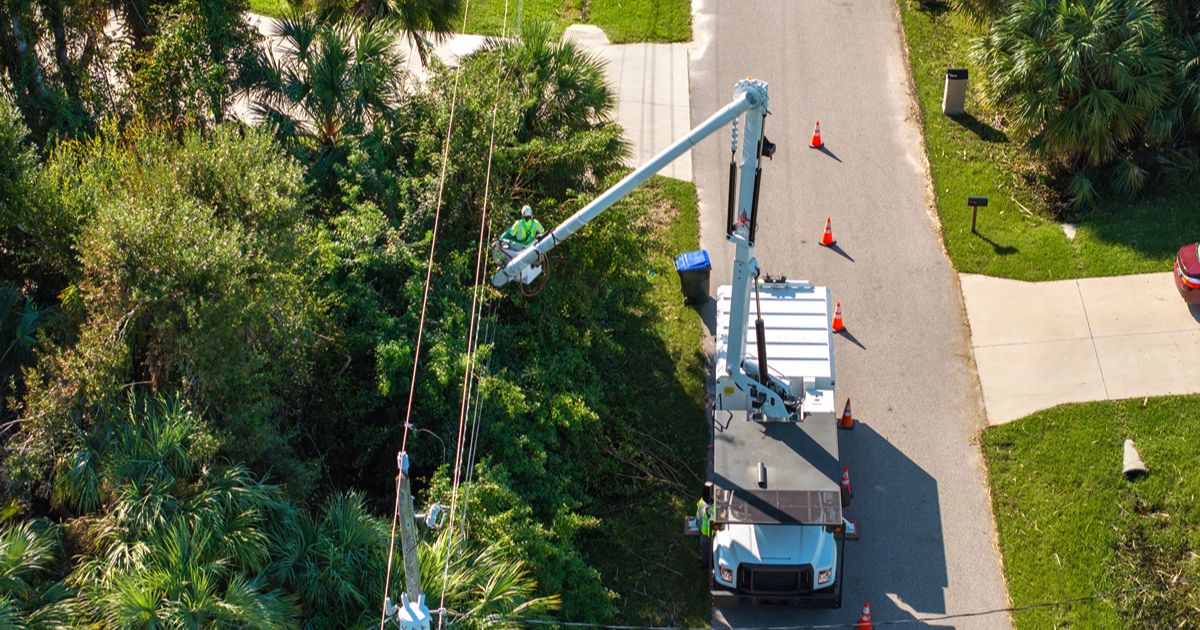
Start tree service for new construction before demolition, digging, or the first delivery.
Miami builders and homeowners need to know which trees stay, where equipment can travel, and which permits apply.
Renovations need the same care when a pool, driveway, or addition brings work near existing roots.
When Should You Schedule Tree Service for New Construction?
Schedule it while the design is still on paper. That is when moving a driveway or a trench costs the least. Bring the site layout, a property survey, and notes on drainage, utilities, and access.
Here is a common conflict. A healthy tree sits beside a planned backyard addition. The finished walls leave room for the branches.
But the only path for equipment runs straight across the root zone. It is far cheaper to fix it in planning.
Bring tree service in Miami into early planning so tree work and building work follow one schedule. Ask everyone involved to mark:
- Trees to keep, remove, or relocate.
- Digging areas for footings, pipes, and pools.
- Space for trucks, dumpsters, and stored supplies.
- Low branches that could block equipment.
Does a Building Permit Cover Tree Removal in Miami?
No. In the City of Miami, tree documents go in with the master building permit application.
The city recommends starting the tree permit first, or at the same time, to avoid delays. The city’s tree permit page page lists what to submit.
The city’s new construction checklist asks for these items:
- A tree and boundary survey no older than 12 months.
- A tree disposition plan marking each tree to remove, remain, or relocate.
- Tree protection and barrier details for every tree that stays.
- A certified arborist report less than three months old at the time of submittal.
- A one-year guarantee on newly planted trees.
Timing matters here. An arborist report done early in design can expire before you submit. Plan the report date around your filing date.
Confirm Which Rules Apply to Your Lot
A Miami mailing address does not always mean the property sits in the City of Miami. Some cities in Miami-Dade have their own tree rules.
The county handles unincorporated areas and cities without their own ordinance. Our post on Miami tree removal laws covers the basics.
Put permit duties in writing: who files, who answers corrections, and who tracks conditions. Confirm the approvals for your parcel before you book tree removal.
How Can Crews Protect Roots During Building Work?
Protect the ground around each kept tree before the first delivery. UF/IFAS Extension explains in its building near trees guidance that root damage is the biggest danger from construction.
It warns against compacting soil, changing soil level, or digging in the root zone.
Keep Trucks Out of Protected Areas
UF/IFAS recommends a barrier fence outside the dripline to keep vehicles, materials, and foot traffic off the roots. In the City of Miami, follow the protection plan approved with your permit.
Show drivers where to unload and park. Set aside separate spots for concrete washout, debris, and supplies. A fence means nothing if workers move it whenever they need more room.
Plan Digging and Grade Changes Around Roots
UF/IFAS advises routing utility lines around or under tree roots. Ask for an arborist review before any crew cuts roots or changes soil levels near a kept tree.
Roots and hardscape clash often in Miami, as our post on roots lifting sidewalks shows. A new driveway or patio creates the same risk.
If a trench conflicts with the plan, pause that section. Let the designer and arborist find another route before digging continues.
Can Trimming Make Room for a Renovation?
Sometimes. Selective pruning can clear branches from a new roofline. It cannot fix a root conflict or a tree that is simply too close to the structure.
Show the planned roofline and equipment height when you request tree trimming. Ask which cuts make sense and how much clearance they give.
Do not use heavy pruning as a shortcut. Miami-Dade County treats excessive canopy cutting or root cutting that destroys a tree as a code violation.
When saving the tree is not practical, removal or relocation needs its own review.
What Should a Construction Tree Estimate Include?
A good estimate lists each task on its own line. You should not have to guess about hauling, barriers, or paperwork. Compare bids with these questions:
- Which trees and branches does the quote cover?
- Who handles permits and the arborist report?
- Where will crews enter and park equipment?
- Is debris removal included?
- What stump work and cleanup are included?
- Who approves changes if site conditions differ?
Talk through stump grinding with your builder when paving, or a foundation will cover that spot.
Grinding alone may not meet the builder’s excavation needs, so have the contractor spell out the required ground prep.
Who Checks the Trees After Contractors Leave?
Book a follow-up visit with a qualified tree professional. University extension guides note that construction damage may not show for several years.
A green canopy at handover does not prove the tree escaped injury.
Keep dated photos from before, during, and after the build.
Watch for thinning leaves, dying branches, or sinking soil, and report changes early.
Bring Your Site Plan to the First Tree Visit
Acosta Tree Service has handled trimming, removal, and stump grinding for Miami homeowners and businesses since 1985.
We are licensed, insured, and every estimate is free.
Call (305) 221-0960 and have your proposed layout ready to discuss.