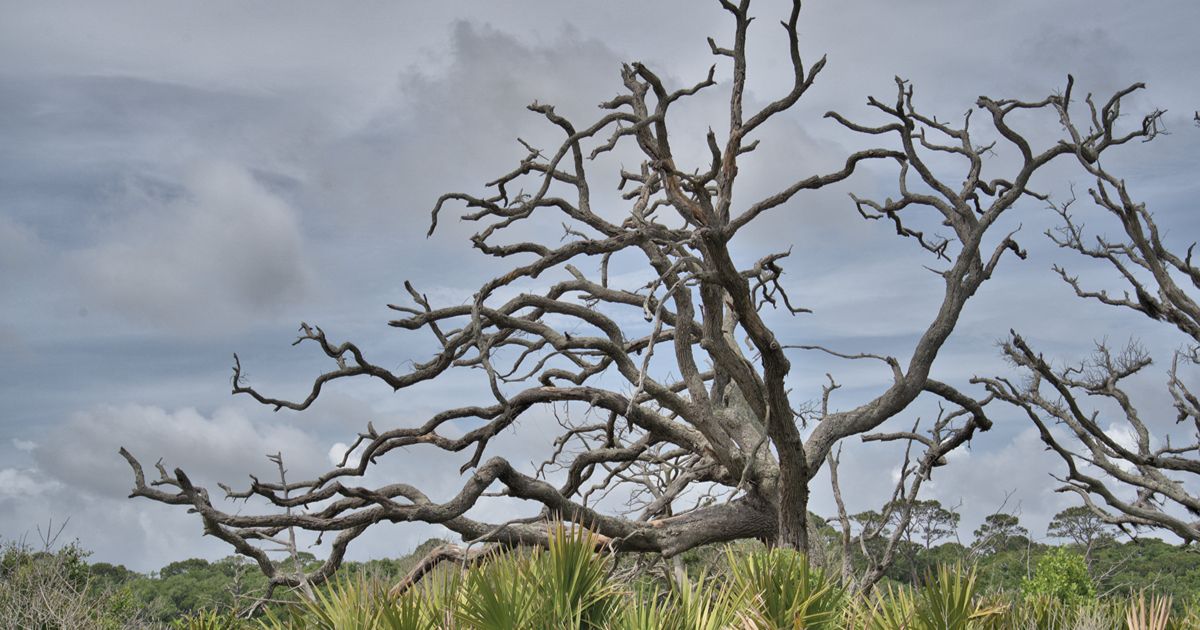
A dead tree does not get safer with time. It gets weaker every month it stands.
Dead tree removal in Miami matters for more than looks, because a dead tree that falls can leave you paying for a neighbor’s damage.
Here is how to spot one, what Florida law says, and what to do now.
Why Is a Dead Tree More Dangerous Than a Live One?
A dead tree can’t repair itself or hold its own weight for long. Its wood turns brittle. Its roots rot so the whole tree can tip over.
A live tree bends in the wind. A dead one snaps. In Miami, a summer thunderstorm can drop a dead limb on a car or a pool cage.
Dead palms carry their own risk, since the heavy head can break off in one piece.
Dead trees are also riskier to cut down. A climber can’t trust a dead limb to hold a rope. Crews often need a bucket truck or a crane.
That is why a dead tree calls for professional tree removal, not the cheapest handyman with a ladder. This extra care can raise the price.
How Can You Tell if a Tree Is Dead or Just Bare?
A tree is likely dead when its bark falls away, its twigs snap dry, and no green layer shows under the bark.
UF/IFAS Extension points out that some Florida trees drop their leaves for part of the year. So check for these signs instead:
- No green under the bark. Scrape a twig with your thumbnail. Green and moist means alive.
- Twigs that snap clean. Live twigs bend. Dead ones crack.
- Loose bark. Bark that peels off in sheets is a bad sign.
- Fungus at the base. Mushrooms on the trunk or roots point to rot inside.
- A dead center leaf on a palm. A brown or missing spear in the crown is a serious warning.
If you see dieback or a lean, check these other warning signs too.
Who Is Liable if a Dead Tree Falls in Miami?
In Florida, the owner of a dead tree is generally responsible if it falls and damages a neighbor’s property.
If a healthy tree falls in a storm, each owner usually covers their own damage.
That rule comes from Florida Jurisprudence, a legal reference summarized in the Handbook of Florida Fence and Property Law from UF/IFAS.
The handbook notes that no Florida case directly tests the live versus dead split. So treat it as the general rule, not a promise.
The real issue is notice. If you knew, or should have known, the tree was dead, it is hard to call the fall bad luck.
If the Dead Tree Is Yours
Ask your insurance agent how your policy treats a claim from a tree you knew was dead. Then get the tree down.
If the Dead Tree Is Your Neighbor’s
Tell your neighbor in writing and attach dated photos. That letter shows they knew. The UF/IFAS handbook explains that you may trim branches hanging over your side, at your own cost and only up to the property line.
If a dead tree already lands on your roof, get everyone safe first, then call your insurer.
For a real dispute, talk to a Florida attorney. This article is general information, not legal advice.
Do You Need a Permit for Dead Tree Removal in Miami?
Often you don’t, but it depends on where you live. Miami-Dade County’s tree code exempts dead trees from removal permits, as long as the tree is not inside a natural forest community.
Cities can set their own rules. The City of Miami, for example, still reviews dead-tree removals and may require a certified arborist report.
Single-family homeowners have one more path. Under Florida Statute 163.045, a local government can’t require a permit, fee, or replanting if an ISA-certified arborist or a Florida-licensed landscape architect documents that the tree poses an unacceptable risk. Three limits matter:
- It covers single-family detached homes only, not commercial lots or condos.
- You need the documentation before the tree comes down.
- It does not apply to mangroves.
What Should You Do First About a Dead Tree?
Keep people and cars out of the fall zone, then get the tree checked. Here is the order we suggest:
- Clear the fall zone. Move cars and play sets at least as far away as the tree is tall.
- Take dated photos. Shoot the whole tree, the trunk, and the base.
- Confirm whose tree it is. If the trunk sits on the property line, talk with your neighbor first.
- Get an assessment. An arborist report helps with permits, insurance, and the state exemption.
- Check your city’s rules before the work, not after.
- Hire the right crew. Choose a company that is licensed and insured, and ask for proof.
Do not wait for the next storm. Atlantic hurricane season runs through November 30, and crews get booked fast once a storm passes.
Get the Dead Tree Down Before It Picks the Day
A dead tree will come down one way or another. A planned removal costs less and hurts no one.
Call Acosta Tree Service at 305-221-0960 for a free estimate, or visit our Miami tree service page.