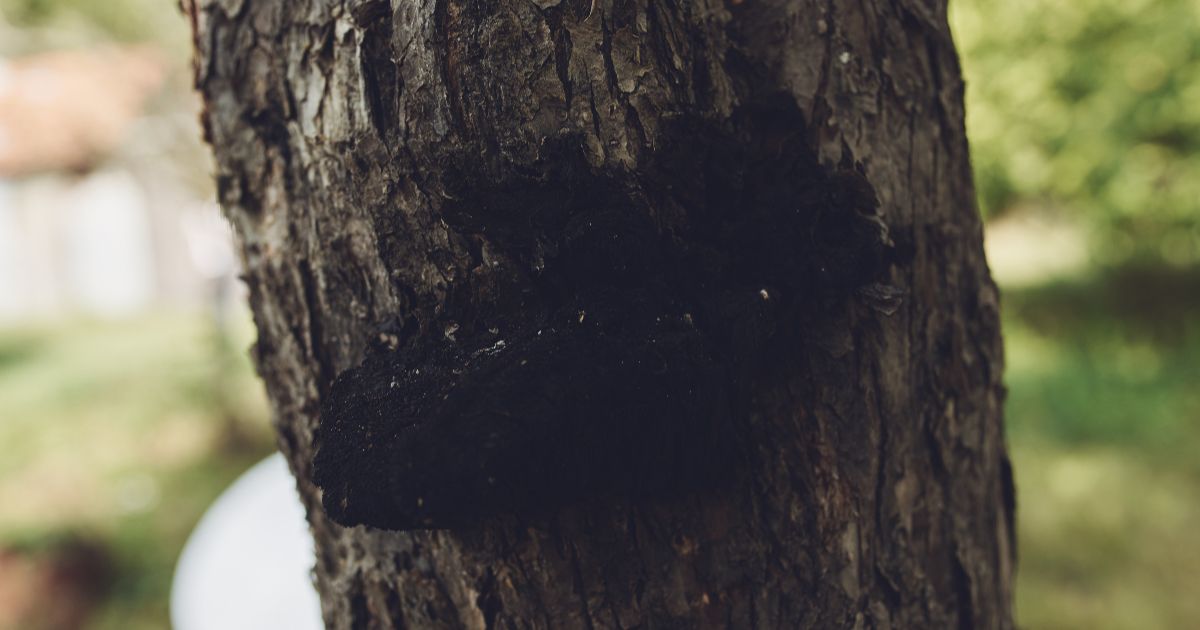
Tree bark most often turns black because of sooty mold, a fungus that grows on the sticky waste left by sap-sucking insects.
Other causes include fungal cankers, wet wood seeping from the trunk, and harmless algae or lichen.
The color can look scary, but not every case means your tree is dying. The real question is what sits underneath that dark layer.
I want to walk you through the main causes and how to tell a minor issue from a serious one.
Common Reasons Tree Bark Turns Black
Tree bark turns black for a few main reasons, most of which trace back to insects, fungus, or moisture; if you know which one you have, it changes how you fix it.
Here are the causes I see most often.
Sooty Mold From Insects
Sooty mold is the top reason bark turns black. Insects like aphids, scale, and whiteflies feed on the tree and leave a sticky waste called honeydew. A black fungus then grows on that sweet film, coating the bark and leaves.
The mold itself does not feed on the tree. It only grows on the bug waste. Still, it points to a pest problem you should treat. These same pests and diseases can weaken a tree over time if you leave them alone.
Fungal Cankers and Disease
Some fungal diseases attack the bark directly, turning it black. Cankers form sunken, dark patches that can crack open and spread. Sooty canker, common in warm climates, kills the bark and leaves a charred look.
This type of black bark is more serious than sooty mold. The fungus damages living tissue, and it can spread to healthy limbs. Watch for early signs of pruning needs, since cutting out infected wood often stops the spread.
Slime Flux and Wet Wood
Slime flux makes dark, wet streaks run down the trunk. Bacteria build up inside the wood and push out a smelly liquid through cracks or old wounds. As that liquid dries, it stains the bark dark brown or black.
This problem looks bad, but it is often mild. Most trees live with it for years. Keeping the tree healthy and avoiding fresh wounds helps slow it down.
Algae, Lichen, and Moss
Algae and lichen can darken bark, but they rarely harm the tree. They grow on the surface in damp, shady spots and feed on air and water, not the tree. You will see them as greenish-black or gray crusty patches.
If your bark appears dark only in shady, moist areas, this is likely the cause. It is a sign of high humidity, not disease.
How to Tell If Black Bark Is Dangerous
Black bark is dangerous when it is peeling, oozing, has soft wood, or has dead branches above it. A light black coating that wipes off is usually just sooty mold or algae. The trouble starts when the wood underneath is damaged.
Here are warning signs to check:
- Bark that peels or falls away in chunks
- Soft, crumbly, or hollow wood under the dark spots
- Oozing liquid that keeps coming back
- Dead limbs or thinning leaves above the black area
- It quickly spreads to other parts of the tree
Black bark with these signs ranks among the most common tree problems we get calls about. The sooner you act, the more of the tree you can save.
How to Treat and Prevent Black Tree Bark
You treat black bark by fixing the root cause, not just wiping off the color. Sooty mold goes away once you control the insects feeding the tree. Fungal disease requires the infected wood to be removed. Here is the basic order I follow:
- Find the cause: check for bark that is bug-infested, oozing, or peeling.
- Treat insects with the right control if sooty mold is present.
- Remove dead or infected limbs with clean cuts.
- Improve airflow and light around the tree.
- Keep the tree watered and mulched to stay strong.
- Clean up fallen debris that can spread fungus.
Better airflow does a lot here. Regular tree trimming opens the canopy so bark dries faster and fungus struggles to grow. A strong, healthy tree fights off most of these problems on its own.
When Black Bark Means You Need a Pro
Call a pro when the bark is dying, the wood is soft, or the black is spreading fast. These point to disease or rot that home care cannot fix. A trained arborist can tell the difference between minor staining and real decay.
Putting it off rarely helps. The risks of ignoring tree maintenance grow as the damage spreads, and a weak tree can drop limbs.
If large sections are dead, you may need a tree cutting service to remove the danger before it falls.
Reading the Story Behind Black Bark
Black bark on your tree is a signal, and most of the time, the fix is simple once you know the cause.
Sooty mold means bugs, cankers mean fungus, and algae usually means nothing serious at all.
Look closely at the wood underneath, treat the real problem, and keep the tree strong with good airflow and care.
When the bark is dying or the damage spreads, call an arborist before a small issue becomes a falling limb.