
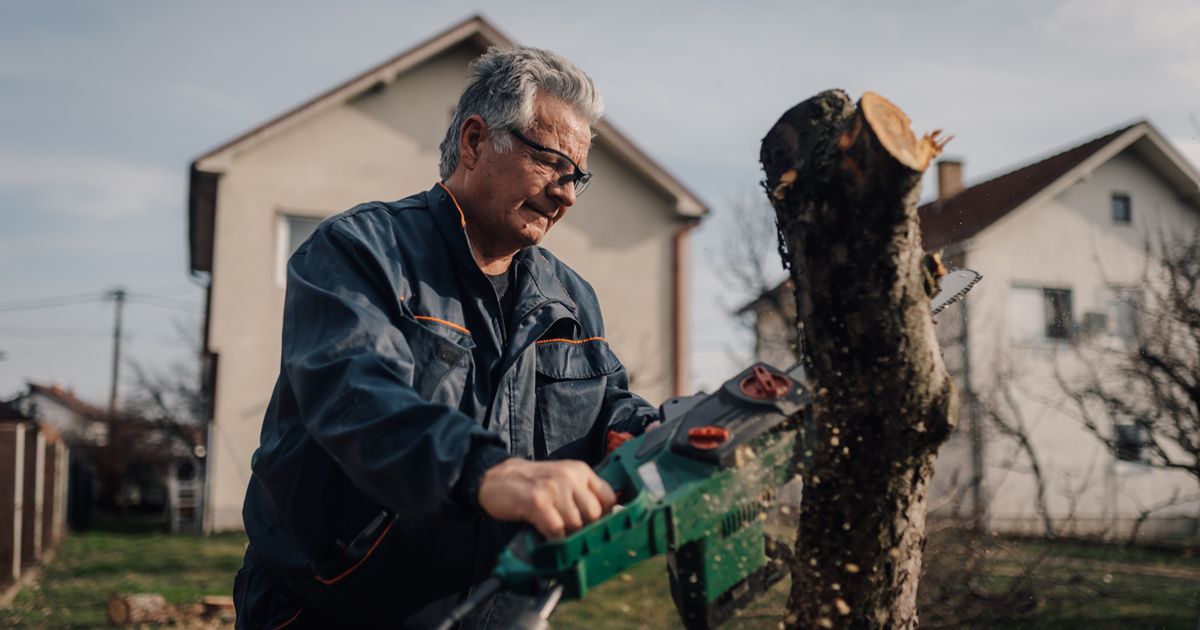
Miami tree removal laws may require homeowners to get approval before cutting down or relocating a tree.
The exact rule depends on the tree’s size, location, species, and property type. Local cities may also have added rules beyond Miami-Dade County requirements.
We recommend checking permit needs before any cutting begins.
When Does Tree Removal Require a Permit in Miami?
A permit is required when a tree is protected under Miami-Dade County rules and no legal exemption applies. Homeowners should never assume that owning the land gives them the right to remove every tree.
Miami-Dade County requires approval before removing or relocating any size tree from public land, multifamily property, commercial sites, agricultural land, and swales.
A permit also applies to protected specimen trees in the yards of single-family homes.
Removing a tree differs from cutting a few limbs. A full removal takes down the trunk and may include later stump work. Homeowners who want to understand the full scope of the job can review how removal works before hiring a contractor.
Permit rules may apply when a tree:
- Grows on a swale
- Stands within public land
- Qualifies as a specimen tree
- Sits inside a protected forest area
- Belongs to a commercial property
- Must be moved to another location
- Will be removed during construction
Your city may use a separate application or review process. Contact the local building, planning, or environmental office before work starts.
What Is a Specimen Tree?
A specimen tree is generally a tree with a trunk diameter of at least 18 inches. County staff measures the trunk about four and one-half feet above the ground.
That size equals a trunk circumference of about 56.5 inches. When several trunks or branches are present at the measuring point, the county may add their measurements.
A specimen tree in a single-family yard normally requires a permit before removal or relocation.
Tree size alone does not show health. A wide trunk may still contain severe decay, cavities, or weak unions. Visible black bark can also indicate disease, moisture issues, or damage that needs closer inspection.
I suggest measuring the trunk before requesting estimates. That simple step can alert you to a possible need for a permit, but the county or city makes the official decision.
Are Trees at Single-Family Homes Exempt?
Some trees inside the yard of an existing single-family home may be removed without a county permit. The exemption does not cover every tree or location.
County law has allowed an exemption when a tree is not a specimen tree, does not grow within a natural forest community, and does not stand in the county right-of-way. Trees beside the home, but within a swale or a public area, may still need approval.
Local city rules can be stricter. A homeowner in Miami, Pinecrest, Coral Gables, or another municipality should check that city’s code before relying on a county exemption.
Removal may become reasonable when a tree has severe structural problems. Common tree cutting signs include major trunk cracks, unsafe leaning, dead crowns, and branches that keep failing.
Which Trees and Areas Receive Added Protection?
Trees inside natural forest communities receive added protection. Work that removes or damages plants in those areas may require a separate permit.
A natural forest community contains protected native plants and habitat. Standard residential exemptions may not apply there. Even the removal of invasive or exotic growth can require county review within these protected areas.
Trees within streets, swales, parks, and other public spaces also need special care. Homeowners should not remove a tree simply because its roots or branches cross onto private land.
Roots that lift pavement need a planned response. Cutting major roots can make the tree unstable, so review safe options for sidewalk root damage before digging.
Can You Remove a Dead or Dangerous Tree?
A dead or unsafe tree may qualify for removal, but its condition does not always cancel the permit process. The property owner should document the danger and contact the correct local office.
Take clear photos of the trunk, roots, canopy, and nearby structures. A written report from a qualified tree professional can help explain why removal is needed. We also advise keeping records of permits, estimates, and inspection notes.
Do not rush into removal unless the tree creates an immediate threat. A weak tree can still require controlled equipment, traffic planning, or utility help.
For trees near buildings, choose a contractor experienced in confined spaces. Comparing a Pinecrest removal company can help you review insurance, equipment, cleanup, and job planning.
Does Tree Trimming Require a Permit?
Proper tree trimming normally does not require a removal permit. Cutting that effectively destroys a tree may still count as an illegal removal.
Miami-Dade County states that pruning must comply with the current ANSI A300 tree care standards. County guidance also says not to remove more than 25 percent of the leaves from each branch.
Topping, hatracking, and severe canopy cutting can weaken a tree. These methods may leave unstable shoots and large open wounds. Trimming versus pruning explains how proper cuts support safety without ruining the canopy.
Anyone who performs tree trimming or removal must have the required landscaper permit. Homeowners should also ask for proof of insurance before allowing work near a house, fence, pool, or vehicle.
What Happens After Illegal Tree Removal?
Illegal tree removal can bring enforcement action, civil penalties, replacement duties, and higher permit costs. Fixing the issue afterward may cost far more than getting approval first.
Miami-Dade County requires an after-the-fact permit when a protected tree has already been removed, relocated, or effectively destroyed. County information states that application and per-tree charges for this permit cost twice the normal amount.
Officials may also require new trees to replace the lost canopy. Ignoring a notice can lead to added enforcement under county code.
Tree debris must also be handled correctly after approved work. Ask the contractor who will haul logs, branches, and chips, then review how debris removal works before accepting an estimate.
Check the Rules Before the First Cut
Miami tree removal laws protect public safety, neighborhood canopy, and valuable natural areas.
Before removing a tree, confirm its size, location, legal status, and local permit needs.
Acosta Tree Service can inspect the site, explain the proposed work, and provide a free estimate at (305) 221-0960.