
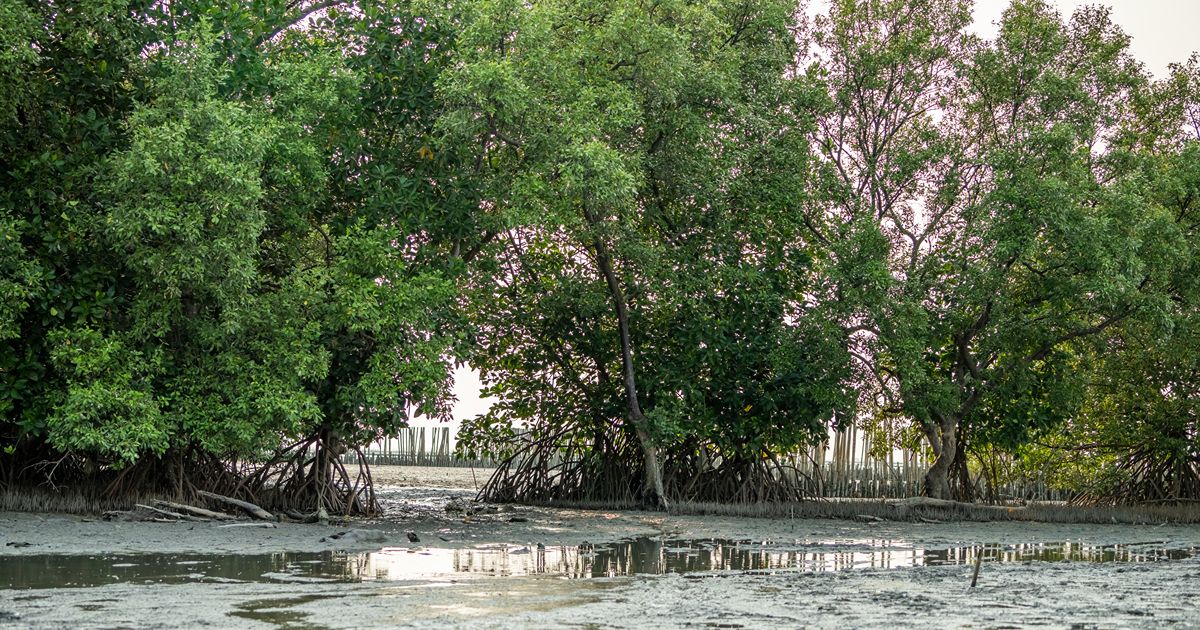
Salt air burns leaves, and salty or alkaline soil makes it hard for roots to take in water and food.
That is the core challenge of coastal tree care in Miami.
The damage often looks like drought or disease, so homeowners treat the wrong problem.
Here is how to tell what salt is doing to your trees and what actually helps.
What Does Salt Air Do to a Tree’s Leaves?
Salt air dries out leaves and burns their edges. Wind carries tiny drops of seawater inland.
The salt settles on leaves and buds, pulls out moisture, and kills cells at the tips and margins.
The damage has a pattern. It shows up worst on the side of the tree that faces the ocean or the bay. The sheltered side often looks fine.
That one-sided browning is your best clue. Pests and disease rarely line up with the wind.
Still, a stressed tree is an easy target, so watch for pests and disease moving in after salt damage.
How far inland does salt spray reach? It depends on wind, storms, and what stands between your yard and the water.
After a strong tropical storm, salt can land a certain distance from the shore.
How Salty Soil Starves Roots of Water
Salt in the soil makes it harder for roots to absorb water. Roots draw in water because the soil has less salt than the root does.
When the soil gets saltier, that pull weakens. The tree goes thirsty in soggy ground.
This is why salt stress fools people. The tree wilts, drops leaves, and looks dry. So the owner waters more and adds fertilizer.
But most fertilizers are salts. Extra feeding can make the problem worse.
Where the salt in Miami soil comes from
- Storm surge that floods yards with seawater
- Salt spray that washes off leaves into the root zone
- Irrigation from wells touched by saltwater intrusion
- Years of heavy fertilizer use
Why Coastal Tree Care in Miami Starts With the Soil
Much of Miami-Dade sits on limestone with a thin layer of soil on top.
That limestone makes the soil alkaline. High pH locks up nutrients the tree needs, even when they are in the ground.
The signs are easy to spot once you know them. Yellow leaves with green veins often point to an iron or manganese shortage.
On palms, new fronds may come out small, curled, and frizzled. These trees are not sick from a bug. They are hungry in soil that holds food back.
Sandy soil drains fast, and that cuts both ways. Heavy rain can flush salt down past the roots. But nutrients wash out just as quickly.
Which Trees Hold Up Best in Coastal Miami Yards?
Trees that grew up near the coast handle salt far better than most imported shade trees. The UF/IFAS Extension publishes salt tolerance ratings for Florida plants.
Check that rating before you plant anywhere near the water.
Native trees often named for coastal yards include:
- Sea grape
- Buttonwood
- Cabbage palm, also called sabal palm
- Gumbo limbo
Here is the catch. Some of the toughest salt-tolerant trees are invasive. Australian pine handles salt spray well, but it spreads fast and crowds out native plants.
Before you plant, check this list of invasive trees to avoid.
Can a Tree Recover After Storm Surge?
Many trees recover from a surge if the salt flushes out of the soil quickly. Brown leaves alone do not mean a tree is dead.
The roots and trunk decide that. The National Hurricane Center tracks storm surge risk for the Miami coast each season.
After a surge, follow these steps:
- Check for hazards first. A leaning trunk, cracked limbs, or lifted roots need fast attention. Some trees will need full tree removal.
- Flush the soil with fresh water if heavy rain has not done it.
- Hold off on fertilizer until the tree shows new growth.
- Wait for new leaves before deciding the tree is lost.
- Remove only dead wood. Careful tree trimming takes weight off without stressing the tree more.
The best defense happens before the storm. Salt damage is one more reason to handle your hurricane season prep early.
When this advice does not apply
Salt spray matters most for homes near the bay or the ocean. Yards farther inland, like much of Kendall and Westchester, see far less of it.
The alkaline soil problem still applies there. And if a tree shows cracks, rot, or a sudden lean, treat it as a safety issue first, not a salt issue.
Get a Salt-Stressed Tree Checked Before You Treat It
Salt burn, nutrient lockup, and disease can look almost the same from the ground.
A wrong guess wastes money and can hurt the tree.
If a tree near the water is browning or thinning, call a local tree service Miami homeowners trust for a free estimate at 305-221-0960.