
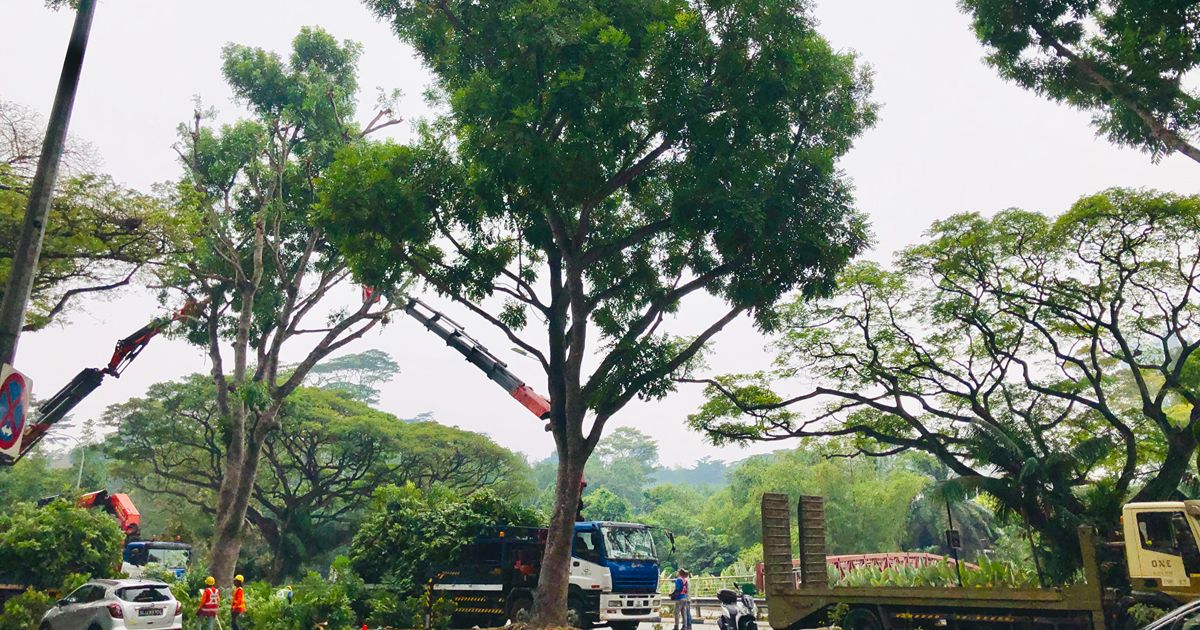
Commercial tree service in Miami is less about looks and more about liability, access, and timing.
A tree on a retail lot or office campus hangs over cars, customers, and sidewalks every single day.
That changes how the work gets planned, scheduled, and written up.
This article covers what property owners and managers should expect and what to ask before signing a contract.
How Is Commercial Tree Service Different From Residential Work?
Commercial tree work carries more risk and more moving parts. More people walk under the trees.
More cars park beside them. And more parties have a say, from owners to tenants to insurers.
We have offered tree service in Miami since 1985, and the tree science is the same on a shopping plaza as in a backyard.
What changes is everything around the tree.
Work Windows and Site Access
Crews often need to work early, late, or on weekends to keep entrances and parking open. Part of a lot may need cones or a short closure. Bucket trucks and chippers need a clear path in.
More People to Answer To
A homeowner makes one call. A commercial job may need sign-off from an owner, a manager, and sometimes a tenant with a lease clause about landscaping. Build that approval time into your schedule.
What Commercial Tree Service in Miami Usually Covers
Most commercial contracts center on safety clearance and hazard control. The main services are:
- Clearance pruning. Routine tree trimming keeps limbs off drive lanes, walkways, lights, and building walls.
- Hazard removal. Dead, leaning, or storm-split trees often need full tree removal before they fail on their own.
- Palm care. Dead fronds and coconuts drop onto parked cars. Regular palm cleaning reduces customer damage claims.
- Root and pavement conflicts. Roots lifting sidewalks create trip hazards in the busiest part of the site.
Tree service is not the same as landscape maintenance. Mowing, shrubs, and irrigation usually sit under a separate contract.
Mixing the two often means tree work gets skipped because the landscape crew lacks the gear or training.
Why Trees Become a Liability Issue on Business Property
A falling limb or a raised sidewalk on business property can lead to an injury or damage claim against the owner. The longer a known hazard sits, the harder it is to defend.
A limb through a customer’s windshield costs far more once you add claims and downtime.
Keep a simple record for every tree job. Note the date, the trees worked on, and what was done.
Save photos too. That paper trail shows you acted on known risks. If you ever face a claim, talk to a lawyer about your specific situation.
Do Commercial Properties Need Permits for Tree Work in Miami?
Often, yes. Removing a tree usually needs a permit, and heavy pruning sometimes does too.
The rules depend on whether the property sits in unincorporated Miami-Dade County or inside a city with its own code.
Our overview of Miami tree removal laws covers the basics for homeowners. Commercial sites follow the same rules, plus a few extra ones.
For example, many owners want trees cut back so a store sign shows from the road.
Check with the county or city before any removal. A permit mistake can bring fines and replanting orders.
What Should You Ask Before Hiring a Commercial Tree Service?
Ask for proof of insurance, a written scope, and a named person in charge. Those three things weed out most bad bids.
Here is a fuller list:
- Insurance. Request a certificate showing general liability and workers’ comp, with your company listed as the holder.
- Credentials. Ask who on the crew holds an International Society of Arboriculture certification.
- Written scope. The bid should name each tree, the type of cut, and the ANSI A300 standard.
- Cleanup. Confirm that debris hauling and stump grinding are in the price or listed as extras.
- Storm response. Ask how fast they can reach your site after a named storm.
Watch out for the cheapest bid that promises to “cut everything way back.” That often means topping.
Topped trees regrow weak shoots that break easily, so you pay again sooner.
Research from UF/IFAS Extension on pruning for wind resistance explains why structural pruning holds up better in storms.
Plan Tree Work Around Hurricane Season, Not After It
Book structural pruning in the months before June. Crews have open schedules then, and your trees go into storm season lighter and stronger.
After a storm hits, every property in the area calls at once.
Our hurricane-season prep steps apply to commercial sites too. The difference is scale.
A plaza with 40 trees works best on a yearly plan, with the riskiest trees handled first.
Put Your Property’s Trees on a Written Plan
Start with a walk of your site. List every tree that hangs over parking, entrances, or walkways, and note any that look dead, split, or leaning.
Then call Acosta Tree Service at 305-221-0960 for a free estimate and a written plan you can share with owners and insurers.