Pollarding can be good for trees in Miami, but only when an expert starts it early and repeats it on the right schedule.
Done wrong, it acts like a topping and slowly weakens the tree. This pruning style cuts branches back to the same points year after year.
In our hot, stormy climate, the method you pick matters more than most homeowners expect.
I want to show you when this technique helps and when it does real damage.
What Pollarding Means for Your Trees
Pollarding is a pruning method that removes the upper branches of a young tree to control its size and shape.
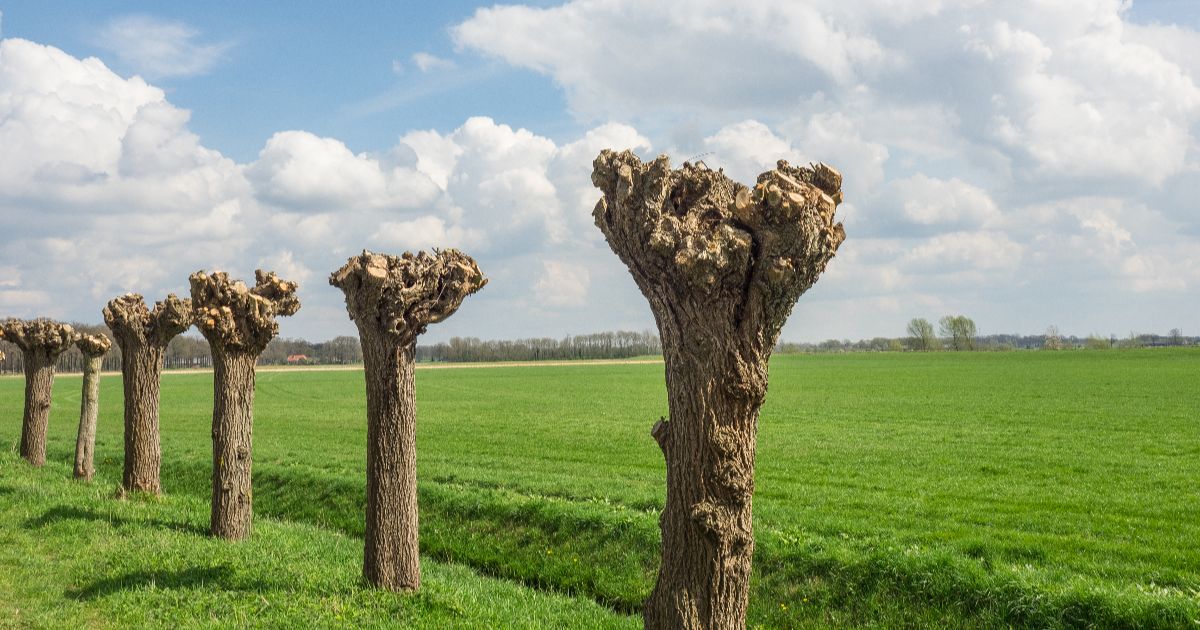
You cut back to the same spots each time, and those spots form swollen knobs called pollard heads. New shoots grow from those heads, giving the tree a dense, tidy crown.
This is not a one-time job. Once you start, you must keep cutting the tree on a regular schedule, often every 1 to 2 years.
If you skip years, heavy new growth forms at the knobs and can snap off.
That is why the benefits of regular trimming help you understand the long-term commitment that pollarding requires.
When Pollarding Helps Miami Trees
Pollarding helps Miami trees when you start on a young, healthy tree and keep a steady cutting schedule.
It controls height near power lines, keeps trees off roofs, and forms a strong frame over time. The key is to start early and never let the tree outgrow the plan.
Done right, this method can also lower storm risk. Smaller, balanced crowns catch less wind during hurricane season.
Still, the wrong species or a late start can flip those benefits into problems fast.
Trees That Respond Well
Some trees take to pollarding far better than others. Good candidates in our area include:
- Trees with strong sprouting habits, like some figs and certain ornamental species
- Trees you want to keep short under utility lines
- Trees planted in tight yards where full-size is not an option
These trees push out fresh shoots after each cut, which keeps them full and healthy.
Trees You Should Never Pollard
Many trees suffer when crews try to pollard them. Slow-growing trees and most native shade trees do not recover well from heavy cuts.
Their wounds stay open longer, which invites rot. If you have noticed how pests and diseases spread through stressed trees, you can see why a bad cut becomes a real threat.
Old trees are also poor candidates. You cannot start true pollarding on a mature tree. Cutting big limbs back hard only stresses them and opens large wounds.
Pollarding vs Topping: Know the Difference
Pollarding and topping look alike, but they are not the same thing. Pollarding starts on a young tree and repeats at the same points on a plan.
Topping randomly hacks branches off a mature tree without a system, and it almost always hurts the tree.
Topping leaves big, ragged wounds that the tree cannot seal. The tree then sends up weak, fast shoots that break easily in the wind.
Many homeowners ask for “pollarding” but get topping instead, and the tree pays for it. Knowing how trimming and pruning differ helps you spot the gap between a real plan and a rushed cut.
If a crew offers to “pollard” a tall, full-grown oak in one visit, that is a warning sign. Real pollarding is a long relationship with a tree, not a quick fix.
How to Pollard a Tree the Right Way
Pollarding works best as a careful, repeated process rather than a single dramatic cut. Here is the basic order a trained crew follows:
- Pick a young, healthy tree of a species that sprouts well.
- Choose the height where you want the main framework to sit.
- Make clean cuts at the chosen points to form the first pollard heads.
- Let new shoots grow for one to two seasons.
- Cut those shoots back to the same heads on a regular cycle.
- Repeat for the life of the tree, never skipping the schedule.
Each cut should be clean and small. Watching for the early signs of pruning needs keeps you on track between visits. Skipping the cycle is the most common way for a good plan to turn bad.
Common Pollarding Mistakes Miami Homeowners Make
The biggest pollarding mistake is starting on the wrong tree at the wrong time. People often ask for it on tall, mature trees, which leads to topping and rot. The damage shows up months later as weak limbs and dead wood.
Other frequent errors include:
- Skipping years, which lets heavy growth build up and snap
- Hiring crews who cut with no plan or schedule
- Using the method on species that hate hard cuts
- Cutting during the hottest months, which stresses the tree more
A tree weakened by bad cuts becomes one of the most common tree problems we see in local yards. If your tree already looks thin or scarred from past cuts, you may need a tree cutting service to fix the frame before any new plan begins.
Calling a certified arborist before that first cut saves you years of trouble.
Making the Right Call for Your Miami Trees
Pollarding can be a smart way to shape young trees in Miami, but only with the right species, an early start, and a steady schedule you keep for years.
On the wrong tree, it does more harm than good and can leave you with weak, unsafe limbs.
Before you let anyone make that first cut, talk to a trained arborist who can tell you if your tree is a real candidate.