
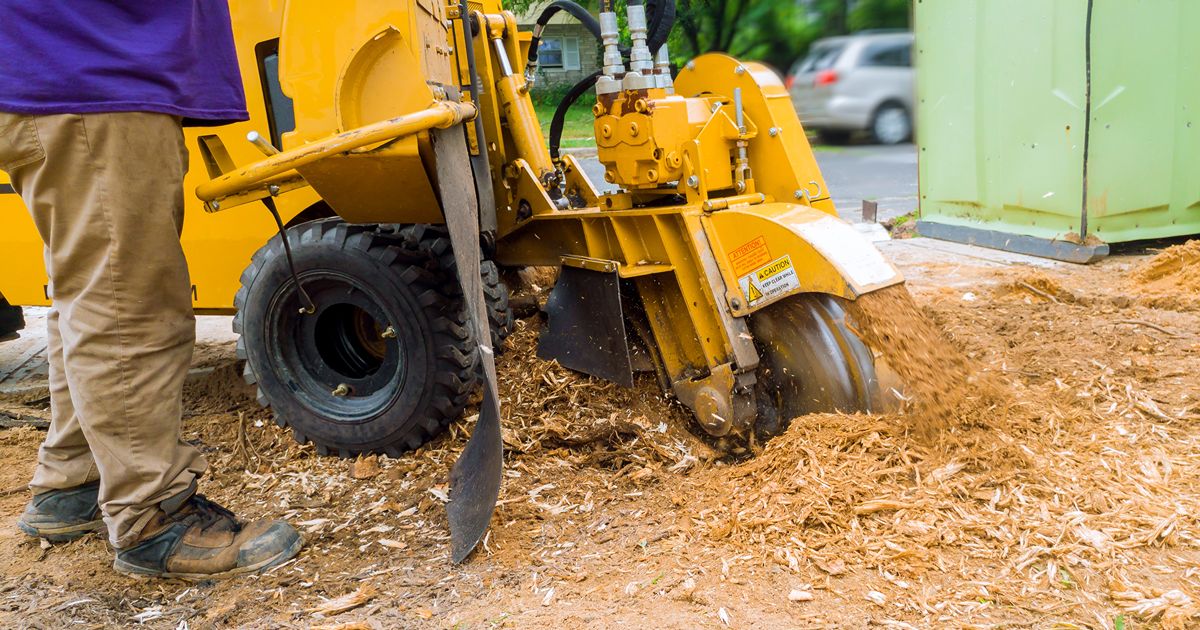
Professional stump grinding in Pinecrest removes the visible part of an old tree stump with a powerful cutting machine.
The operator turns the wood into small chips below ground level, which leaves the yard safer and easier to use.
Most jobs take a few hours or less, but stump size, root spread, access, and nearby objects can affect the process.
Knowing each stage helps you prepare your property and avoid surprises.
What Professional Stump Grinding in Pinecrest Includes
Professional stump grinding includes a site review, safe machine setup, stump removal, and basic cleanup. The crew should also explain how deep they plan to grind and what will happen to the leftover mulch.
A grinder uses a fast-spinning wheel with strong teeth to cut the trunk base into small pieces. Our crew moves the wheel across the wood until the visible stump sits below the surrounding soil.
Homeowners sometimes use the terms “stump removal” and “grinding” interchangeably. Full removal may require digging, pulling, or heavy equipment.
Grinding causes less ground damage and usually costs less because the main roots stay buried.
A clear overview of what stump grinding is can help you compare the two options before scheduling service. The right choice depends on your plans for the area.
How The Process Works
A trained crew follows a set process to protect people, buildings, plants, and equipment. Preparation often takes almost as much care as the grinding itself.
1. The Crew Checks the Work Area
The first step is a close inspection of the stump and the nearby land. Workers check for rocks, metal, and exposed roots. They also look for fences, walls, and electrical equipment.
Underground utility lines matter too. Public utility companies mark public lines, but they don’t mark private ones. That’s why homeowners should point out any sprinklers, landscape lighting, pipes, or private cables.
Access affects which machine we use. A narrow side gate may call for a smaller grinder. Large equipment is better suited to wide trunks in open yards.
2. Workers Prepare the Stump
The operator may cut the trunk base closer to the ground before using the grinder. Less exposed wood can reduce machine time and leave fewer chips behind.
Loose rocks and hard debris should be removed from the area. Flying material can damage windows, vehicles, or nearby features. A professional crew normally creates a safe work zone and uses protective gear during the job.
Some trees should receive a full safety review before grinding begins. A weak trunk may have fallen because of decay, insects, or root damage. Articles about common tree problems explain why nearby trees may need attention too.
3. The Grinder Cuts the Wood
The cutting wheel moves across the stump in controlled passes. Each pass removes a thin layer of wood, turning it into chips.
Grinding depth depends on the stump, soil, machine, and the site’s future use. Many routine jobs remove enough wood to cover the space with soil and grass. Deeper work may be needed for a new walkway, garden bed, patio, or construction project.
Large roots near the surface may also receive limited grinding. The crew should discuss that work first because roots can extend near pipes, foundations, trees, and hard surfaces. Tree roots that lift pavement may require a separate plan, as explained in “sidewalk root damage.”
4. The Area Gets Cleaned
Grinding produces a mixture of soil and wood fragments. The amount can surprise some homeowners because a wide stump may produce a large pile.
Cleanup terms should be clear before work starts. Some services rake the chips into the hole. Others haul away part or all of the material for an added fee. We recommend asking what the estimate includes so the finished yard matches your expectations.
How Long Does Stump Grinding Take?
Most residential stump grinding jobs take less than a day. Small stumps may take under an hour, while large trunks, tight access, thick roots, or several stumps can extend the work.
No single time estimate fits every property. A palm stump may grind differently from dense hardwood. Wet soil can also affect machine movement and yard protection.
Several factors shape the schedule:
- Stump width and height
- Tree type and wood density
- Number of exposed roots
- Distance from the driveway
- Gate width and yard access
- Rocks, concrete, or metal near the trunk
- Cleanup and chip removal needs
- Number of stumps on the property
A tree that was recently cut may still have fresh, tough wood. An older stump may have decay that speeds up some parts of the job, though hidden cavities can make the structure less predictable.
The removal method used before grinding also matters. Homeowners planning both services can review how tree removal works before deciding how to handle the trunk base.
What Happens to the Roots After Grinding?
Most roots stay in the soil after grinding. They stop growing once the tree dies and slowly break down over time.
We don’t remove every root. Pulling out the full system would disturb a much larger area and could damage nearby plants, irrigation, pavement, or structures.
As roots decay, they can leave small dips in the yard. Adding soil later can level these spots. How much settling occurs depends on root size, soil type, drainage, and residual organic matter.
Some tree species can send up new shoots from leftover roots. Grinding below the surface lowers this risk, but it won’t stop every sprout. Cut back and monitor any new growth, and treat it as needed.
Black bark, soft wood, mushrooms, insects, or hollow areas may point to decay before removal. This information about black tree bark explains several causes that can weaken a trunk.
Can You Plant a New Tree in the Same Spot?
You can plant near an old stump site, but placing a new tree in the exact hole may cause problems. Remaining roots, wood chips, poor soil, and settling can limit healthy root growth.
A better location usually sits several feet away from the former trunk. The proper distance depends on the old root system, the new species, the mature size, and the available yard space.
Wood chips mixed into the soil can affect planting conditions as they break down. Removing excess chips and adding clean soil can improve the site. A local tree professional can help choose a better place with enough sun, drainage, and room for mature branches.
This resource about the best planting time covers weather, watering, and early tree care in Pinecrest.
How to Prepare Your Yard Before the Crew Arrives
Homeowners can make the job smoother by clearing access and sharing key property details. A little preparation reduces delays and protects nearby items.
Complete these steps before the scheduled visit:
- Move vehicles away from the work path.
- Unlock gates and clear narrow walkways.
- Remove toys, hoses, furniture, and decorations.
- Mark private sprinkler heads and landscape lighting.
- Point out known pipes, cables, drains, or septic parts.
- Keep children and pets inside during the work.
- Close nearby windows when possible.
- Ask about wood chip removal before grinding starts.
Low branches may block equipment from reaching the site. Proper pruning can create safe clearance without harming the tree. Homeowners can review the difference between trimming and pruning when nearby limbs need work.
Avoid cutting roots or digging around the stump before the crew arrives. Hidden metal, stones, and utility parts can create danger for the grinding wheel.
What Affects the Cost of Stump Grinding?
The price depends mostly on stump size, access, tree type, root spread, and cleanup. A contractor may charge by trunk width, total job time, equipment needs, or the number of stumps.
Large trunks cost more because they require extra passes. Hardwood can also take longer to grind. Difficult access may require specialized machinery or additional labor.
Other price factors include:
- Deep grinding requests
- Surface root grinding
- Wood chip hauling
- Heavy debris around the trunk
- Sloped or wet ground
- Fence removal for access
- Several stumps across the property
- Travel and equipment setup
A written estimate should state the work area, expected depth, chip handling, and cleanup terms. Comparing price alone can lead to missing services or yard damage. This article on choosing a tree service covers useful points to review before hiring a crew.
Licensed and insured service also matters. Stump grinders are heavy machines with fast-cutting wheels. Skilled operation protects the lawn, home, nearby plants, and people around the site.
What You Can Do With the Wood Chips
Wood chips can serve as mulch, but they should not pile against trunks, walls, or building foundations. A thin layer can help hold soil moisture and reduce weed growth in suitable landscape areas.
Fresh chips may include soil, bark, and small root pieces. That mix may not look as neat as store-bought mulch. Homeowners can use it in less visible beds, walking paths, or compost areas.
Do not fill the entire hole with loose chips when you plan to install grass. The material will shrink as it breaks down. Remove much of the debris, add clean soil, level the space, and allow for minor settling.
Extra material may need hauling. Property owners who also have limbs, logs, or storm waste can review how tree debris removal works before arranging cleanup.
When Grinding May Not Be the Right Choice
Stump grinding may not be suitable for every property or project. Full removal can make more sense when construction, drainage work, or major excavation will take place in that exact spot.
A different approach may be needed when the stump sits:
- Against a foundation
- Over utility lines
- Inside a tight raised bed
- Next to a pool structure
- Under a fence or wall
- Near septic equipment
- On a steep slope
- Within an active construction zone
A trained provider should explain the limits before starting. Some jobs need hand work, smaller equipment, utility review, or help from another contractor.
Never burn a stump without checking local rules and site safety. Fire can spread through dry roots or nearby material. Chemical decay products also work slowly and may not solve access, safety, or landscaping needs.
Turn an Old Stump Area Into Usable Yard Space
Professional stump grinding in Pinecrest offers a practical way to clear an unwanted trunk base without tearing up the whole yard.
Good results start with a site review, clear pricing, safe equipment use, and a cleanup plan.
Acosta Tree Service can inspect the stump, explain the right grinding depth, and provide a free estimate.